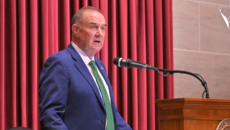
Sen. Curtis Trent has filed legislation aimed at restricting foreign-backed investment in lawsuits filed in Missouri courts, arguing that greater transparency and limits are necessary to protect the state’s judicial system and economic interests.
Senate Bill 881 would prohibit foreign entities from financing litigation in Missouri unless they are a named party in the case. The measure also requires disclosure of outside financial interests tied to active lawsuits.
The proposal builds on reforms enacted in 2023 under Missouri Senate Bill 103, which established licensing and consumer-protection requirements for companies providing pre-settlement funding to individual plaintiffs. That law did not address large-scale commercial litigation finance, where global investment firms have deployed billions of dollars into U.S. legal claims.
Trent said the issue has evolved beyond consumer lending and now involves complex commercial disputes and international capital.
“Missouri courts exist to deliver justice — not to serve as investment platforms for global financiers,” Trent said. “When foreign capital funds litigation against American companies, the courtroom can become more than a venue for resolving disputes.”
Global litigation funders such as Burford Capital, Omni Bridgeway, and Therium have invested heavily in U.S. commercial lawsuits, including patent and contract disputes involving major corporations. Members of Congress have raised concerns about the potential involvement of foreign sovereign wealth funds and overseas investors in litigation portfolios.
Under SB 881, foreign entities would be barred from financing cases in Missouri courts unless they are directly named in the litigation. The bill also provides courts with visibility into third-party financial interests tied to a case.
Trent said transparency is a core component of the proposal.
“In every other area of finance, disclosure and accountability are standard practice,” he said. “There is no reason litigation financing should be treated differently.”
Supporters of the legislation argue that third-party litigation funding can alter incentives in civil disputes. When financial risk is shifted to outside investors, cases that might otherwise be considered speculative may proceed, increasing pressure for settlement and extending litigation timelines.
“Simply being sued can drive up insurance costs, damage brand reputation, and create uncertainty that affects stock prices and investor confidence,” Trent said. “Missouri’s courts were never intended to serve as tools through which foreign interests gain competitive leverage over American enterprise.”
The bill also highlights concerns related to civil discovery. In complex commercial cases, companies may be required to produce proprietary documents and trade secrets. Trent said that if a foreign-backed financier has a financial interest in the case, the potential exposure of sensitive business information becomes a legitimate policy concern.
SB 881 is expected to draw attention from business groups and civil justice stakeholders as the legislative session progresses. Trent characterized the measure as a continuation of Missouri’s recent efforts to increase oversight of litigation financing.
“This is about keeping our courts transparent, impartial, and focused on justice,” he said. “They should not operate as a marketplace for foreign investment.”

Jake Kroesen is a Jackson County native and a graduate of the University of Central Missouri. He holds a B.S. in Political Science.