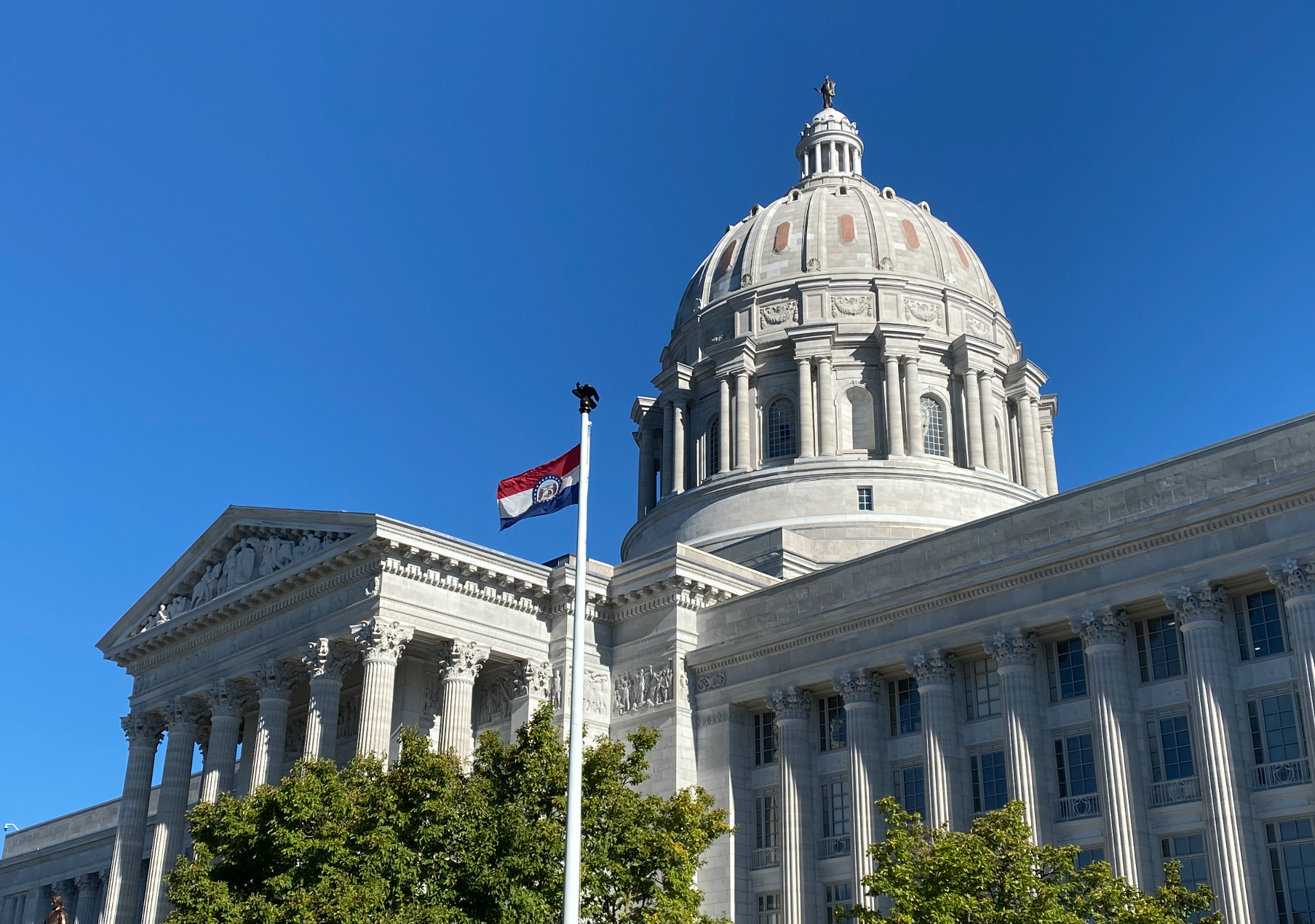
With Missourians getting ready to weigh in on Amendment 5 this August, the fight over it has spilled well beyond Jefferson City.
But while this may seem to be a simple ballot issue, the truth is far from that. Missouri has found itself, quite literally, at the heart of America’s great tax debate.
For a long time, personal income taxes have sat near the top of the revenue pile for state governments. Lately, though, especially in states led by Republicans, there’s a sharper question on the table: in an economy reshaped by technology, online buying and hard competition between states, does taxing income still make the most sense as the backbone of funding?
That argument has landed squarely in Missouri.
If voters approve Amendment 5, it would begin a long-term tax cut for Missourians by creating a path to gradually eliminate the state’s personal income tax. The amendment establishes a constitutional framework that allows lawmakers to phase out the income tax over time as they expand the state’s sales tax base and meet the revenue benchmarks spelled out in the measure. Backers say this would modernize Missouri’s tax code, put more money back into taxpayers’ pockets, and make the state a stronger draw for businesses, entrepreneurs, and workers. Critics see it differently, warning that replacing income tax revenue could squeeze funding for core services and shift more of the overall tax burden onto consumers.
No matter how the vote turns out, Missouri’s argument looks a lot like the one playing out in capitols across the country.
Not that long ago, almost every state leaned heavily on personal income taxes to keep the lights on. The picture today is noticeably different. Nine states now run without a broad personal income tax at all. Others, Iowa, Mississippi, and Louisiana among them, have passed laws meant to sharply cut their income taxes or set them on a track toward full repeal. North Carolina has been trimming rates for years, while Arizona and Georgia have moved quickly with wide tax changes tied to larger economic development plans.
Among many Republican lawmakers, cutting income taxes has become a core plank of economic policy. The pitch is simple enough: income taxes shrink take-home pay and raise the cost of operating a business. Reduce them, or scrap them, and people keep more of what they earn while the state becomes a more tempting place for employers and investment.
Supporters also say Missouri’s current setup is built for a world that has faded. Missouri’s sales tax structure goes back to 1917, a time when spending was mainly about physical goods. People bought clothes, cars, furniture, and household items in stores, and what counts as today’s economy, streaming services, software subscriptions, cloud computing, digital ads, online marketplaces, wasn’t even on the horizon.
Over the decades, spending has tilted more and more toward services and digital products, many of which slip outside older sales-tax definitions. Economists often call this “tax base erosion,” the slow thinning of revenue as governments keep depending on systems designed for an economy that has been replaced by new kinds of trade.
In that light, supporters describe Amendment 5 as an attempt to correct the imbalance: tax a wider slice of current economic activity while, step by step, dialing down taxes on individual income. Instead of taxing work, they argue, Missouri should lean harder on consumption.
That line of thinking matches a broader trend among economists and policymakers who say consumption-based systems fit the present-day economy more closely.
The debate is also tangled up with economic development. States compete for headquarters, factories, tech firms, and skilled workers, and taxes now sit alongside workforce, infrastructure, and quality of life as a selling point in that contest.
Several nearby states have already headed down that road. Tennessee has gotten rid of its tax on investment income. Iowa has passed a plan to bring its individual income tax down to a flat rate. Kansas is still arguing through major reforms, and Arkansas has cut individual income tax rates again and again in recent years.
Supporters of Amendment 5 say Missouri risks being left behind if its neighbors keep cutting while Missouri holds steady.
People who recruit businesses for relocation often point out that executives look at both corporate and personal tax costs when they line up potential sites. For high earners and entrepreneurs, the differences from one state to another can mean thousands of dollars each year. Backers believe ending the income tax could become another edge for Missouri as it tries to land employers and keep younger professionals from leaving.
Opponents, though, argue the conversation shouldn’t be reduced to a competition scoreboard. They point to the income tax as one of Missouri’s biggest revenue streams and warn that removing it without a solid replacement could strain funding for schools, roads, public safety, and health care. They also question whether expanding the sales tax base would hit lower-income households harder, since those families tend to spend a larger share of what they make on taxable goods and services.
Some critics add that growth doesn’t depend on taxes alone, it also depends on worker skills, infrastructure, education levels, housing options, and other basics.
Those clashing views have driven a louder, more visible campaign as the vote approaches.
And even if Amendment 5 fails, the proposal is still more than a routine ballot measure. It signals a larger shift in how many states are thinking about revenue in an economy that looks nothing like the one their tax codes were built around. The choice for Missouri voters isn’t just “should taxes go down.” It’s whether Missouri wants to join a growing list of states trying to rewrite the way the government gets funded in the 21st century.
Across the country, lawmakers keep testing combinations of lower income taxes, broader consumption taxes, and other structural changes. Missouri is now one of the newest, and likely one of the most watched, places deciding whether to move in that direction.
Whatever voters decide in August, the result is likely to steer Missouri’s fiscal choices for a long time.

Jake Kroesen serves as the Editor of the Missouri Times. He hails from Independence, Missouri and enjoys all things Jackson County. A graduate of UCM, he obtained his degree in Political Science.
Discover more from The Missouri Times
Subscribe to get the latest posts sent to your email.