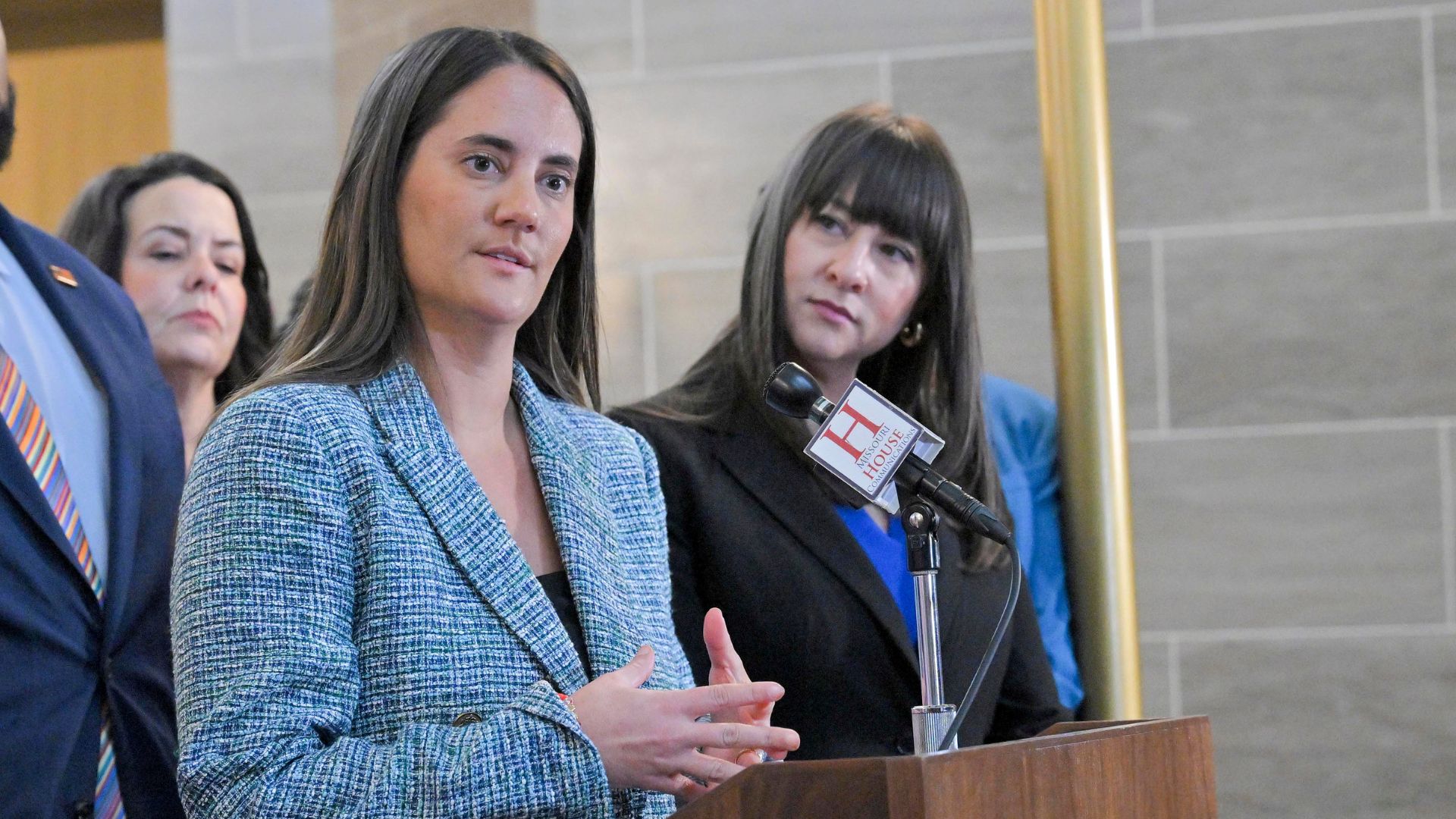
Missouri Times Editor Jake Kroesen sat down with State Rep. Betsy Fogle, the senior-ranking Democrat on the House Budget Committee, to discuss the state budget, tax policy, education, child care and the future of Missouri politics.
Budget priorities and a changing fiscal climate
Jake Kroesen: You’re the senior-ranking minority member on the House Budget Committee. How long have you served on the committee, and why has the budget process become so important to you?
Rep. Betsy Fogle: I’ve served on the budget committee for the last six years, my entire time in the Missouri House. I believe the appropriations process is the most important thing we do as a General Assembly.
We’re taking the hard-earned tax dollars of the 6.2 million Missourians and trying to craft a thoughtful and fiscally responsible budget. That means investing in the next generation, providing the vital services Missourians rely on, and still leaving enough on the bottom line to ensure stability in future years.
This year has been a very different appropriations environment compared to my first five years. I’m interested to see where the final version of the budget lands, but I do have significant concerns about what it might ultimately look like.
Potential budget cuts
Kroesen: Gov. Mike Kehoe has recommended major cuts. Regardless of how we got here, the reality is that revenues are tighter. Do you think the House will be more restrained in its cuts than what the governor proposed?
Fogle: Historically, the House cuts from the governor’s proposal. I can’t think of a single time in my six years here where the House budget exceeded the governor’s recommendation.
The governor has proposed cutting roughly $600 million from the budget this year. In a subcommittee hearing on mental health this week, Chairman Chappell said his goal was to cut an additional $500 million in general revenue. That could total between $2 billion and $2.5 billion in reductions just from the departments covered in House Bills 10 and 11.
Those bills fund services related to care for individuals with disabilities, social services, and the Children’s Division, some of the most important programs the state operates.
The Senate’s role in the budget
Kroesen: Do you feel confident Senate Appropriations Chairman Rusty Black will be able to play the same role Sen. Lincoln Hough did in managing the budget process?
Fogle: I can’t really speak to that. I’ve known Sen. Black since he served in the House, and I’ve always enjoyed working with him.
My concern about the budget process this year is that there may not be someone championing some of the priorities that matter deeply to me, things like fully funding the foundation formula for schools or honoring commitments we’ve made on child care subsidies for working families.
Last year, the governor made specific promises around those programs. My concern is whether there will be someone pushing back against cuts to ensure those promises are kept. I know Sen. Hough did that year after year.
Income tax elimination debate
Kroesen: The governor’s proposal to eliminate the state income tax has generated pushback from both Democrats and some Republicans who say they don’t have enough details yet. Do you think the House will ultimately move forward with the plan?
Fogle: I would be very disappointed if it moved forward in its current form.
Even Republican members have publicly said the proposal lacks details. And I share those concerns. We’re talking about eliminating roughly $9 billion in state revenue at a time when we’re already discussing cuts to vital services for individuals with disabilities and when we’re not fully funding the foundation formula for schools.
Reducing revenue by that amount would be extremely damaging to working families across Missouri.
The governor has described the proposal as “revenue neutral,” but if we eliminate $9 billion in income tax revenue, the alternative is increasing the cost of living through higher sales taxes or expanded taxation on goods and services.
I can’t support a proposal that would increase the cost of living for families in Springfield or anywhere else in the state.
Democrats and affordability
Kroesen: Democrats have argued that affordability is the key issue facing Missourians right now. What can state-level Democrats actually offer to address that?
Fogle: The reality is that many of those ideas don’t get much oxygen in this building because Republicans hold the majority.
When Democrats talk about tax relief, we’re often talking about things like eliminating the grocery tax or removing taxes on diapers and infant formula, things that directly impact families raising children.
We also believe strong public schools are a pathway out of poverty. I think that’s a point of departure from the majority party, which has pushed policies that move more toward privatizing education through vouchers.
Democrats have also talked about health care reforms and reducing prescription drug costs. But ultimately, ideas from the minority party simply don’t receive the same level of debate or consideration.
Mental health policy
Kroesen: Mental health has become a bigger focus in recent years. Do you think there’s room for bipartisan cooperation on solutions?
Fogle: I do think there’s broad agreement that mental health is a priority. But there’s major disagreement about how to address it.
Many of the programs that support mental health services are funded through the budget. If we continue cutting recovery support providers and substance use programs, we’re undermining those efforts.
Medicaid expansion alone provides more than 300,000 Missourians access to mental health services. There are proposals moving through the legislature that could weaken those protections.
So while there’s consensus about the importance of mental health care, there’s a significant divide over the policies needed to support it.
Addressing the child care crisis
Kroesen: Child care has also been a major issue this year. What do you think of Rep. Brenda Shields’ legislation that the governor has endorsed?
Fogle: I’ve supported Rep. Shields’ bill every year she’s filed it. It’s one tool to address the child care crisis happening across Missouri.
But I’m also very passionate about fixing our child care subsidy system. Last year, the governor promised two major reforms: paying providers based on enrollment rather than attendance, and paying providers at the beginning of the month instead of the end.
Those might sound like small changes, but providers across the state were asking for them. Many had experienced delays of eight to fourteen months in receiving payments, which forced some providers to close their doors or stop accepting subsidized children.
The child care system is also critical for foster families. I’ve spoken with families in Springfield who had to return foster children to the system because they lost their subsidy spot and couldn’t afford child care.
To me, that’s government failure at its worst. My concern is that we may enter another fiscal year without implementing the promised reforms.
Education and school choice
Kroesen: You’ve been outspoken about education policy and school choice. What’s your argument against expanding voucher-style programs?
Fogle: Public education is one of the things that makes this country great. It ensures every child, regardless of zip code, religion, or background, has access to opportunity.
I represent Springfield Public Schools, the largest district in the state, with nearly 25,000 students. I take that responsibility seriously.
My concern with expanding privatized systems is the lack of accountability. Public schools are governed by locally elected school boards. Private institutions receiving public dollars often are not.
I’m also concerned about taxpayer dollars going to schools that require adherence to certain religious beliefs or that exclude students based on disabilities or family circumstances. I reviewed the handbooks of schools receiving voucher funding last year and found examples where students with disabilities were explicitly told there was no place for them.
That’s not a system I believe public tax dollars should support.
Why Democrats struggle statewide
Kroesen: Missouri has become increasingly Republican. Why do you think Democrats struggle to connect with voters?
Fogle: Our political climate has become incredibly polarized. Over the past decade, political discourse has become more volatile and less focused on constructive debate.
For me personally, the strategy has always been simple: listen to my district. I’ve knocked on more than 40,000 doors across my campaigns. I’ve spoken to nearly every registered voter in my district multiple times.
When I talk to people at their doorsteps, I’m not telling them what I want. I’m asking them what matters to them. My district shapes the priorities I bring to Jefferson City.
The future of Missouri Democrats
Kroesen: What do you see as the future for Missouri Democrats?
Fogle: I hope Missourians understand the value of balance in government.
Right now, one party has overwhelming control of the legislature. That means many major decisions happen without real checks and balances.
Democrats often serve as the voice raising concerns about policies that could harm vulnerable Missourians. With more balance, those conversations would look very different.
A vision for Missouri’s future
Kroesen: If you had to summarize your vision for Missouri’s future, what would it be?
Fogle: I believe the state government should ensure a strong public school system and provide a basic safety net for our most vulnerable citizens.
Beyond that, the government should largely stay out of people’s lives. I believe in individual freedom, the freedom to worship how you choose and live your life without unnecessary government interference.
The Missouri I’m fighting for is a state where opportunity isn’t a limited resource, where rural communities, urban communities, and everyone in between can succeed.
That means strong schools, workforce opportunities, and good-paying jobs. And it means a government that respects people’s freedoms.
Final question
Kroesen: What’s been your song of the session?
Fogle: Lovely Day by Bill Withers. I listen to it every morning, I’ve done that for about six or seven years now.
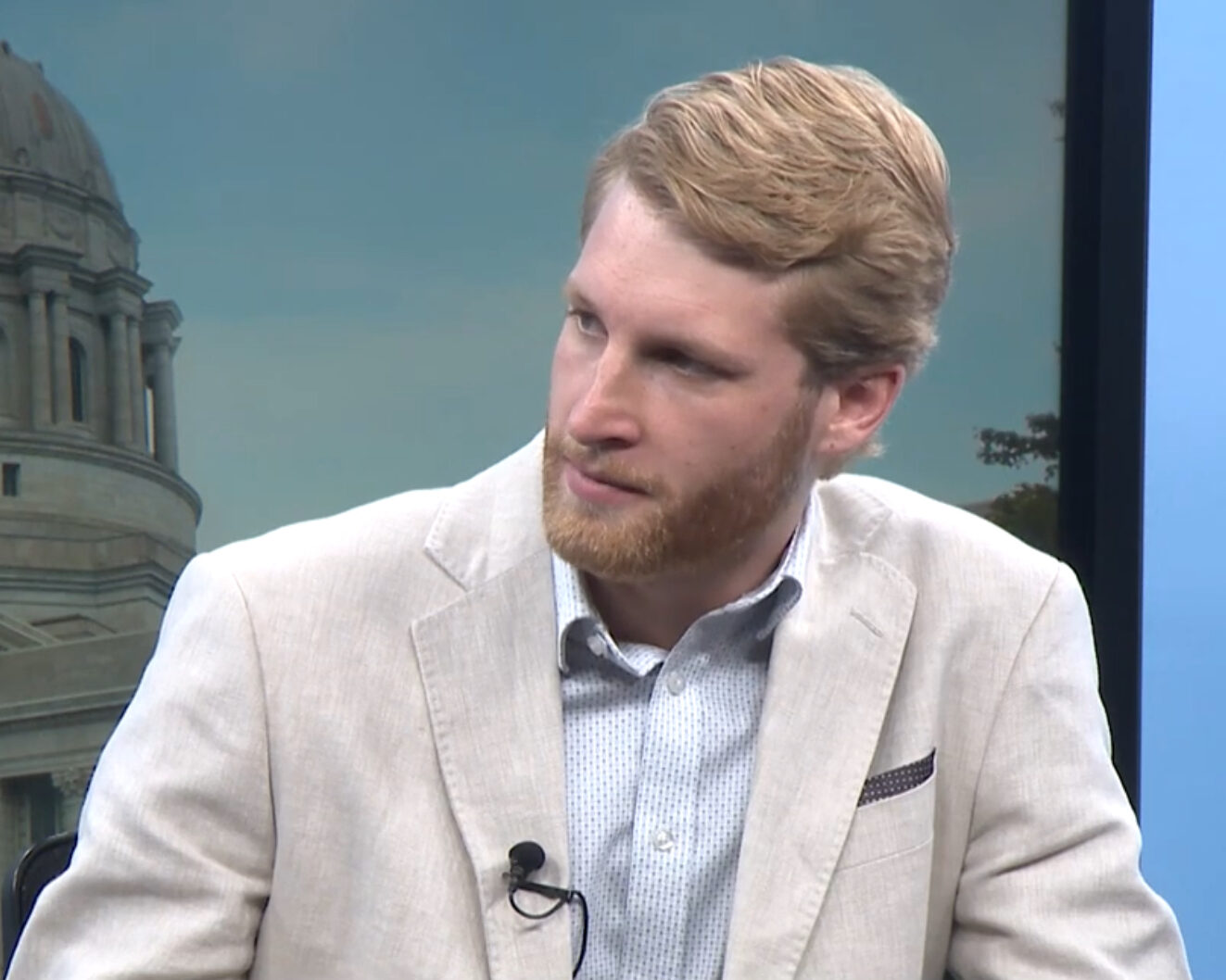
Jake Kroesen is a Jackson County native and a graduate of the University of Central Missouri. He holds a B.S. in Political Science.