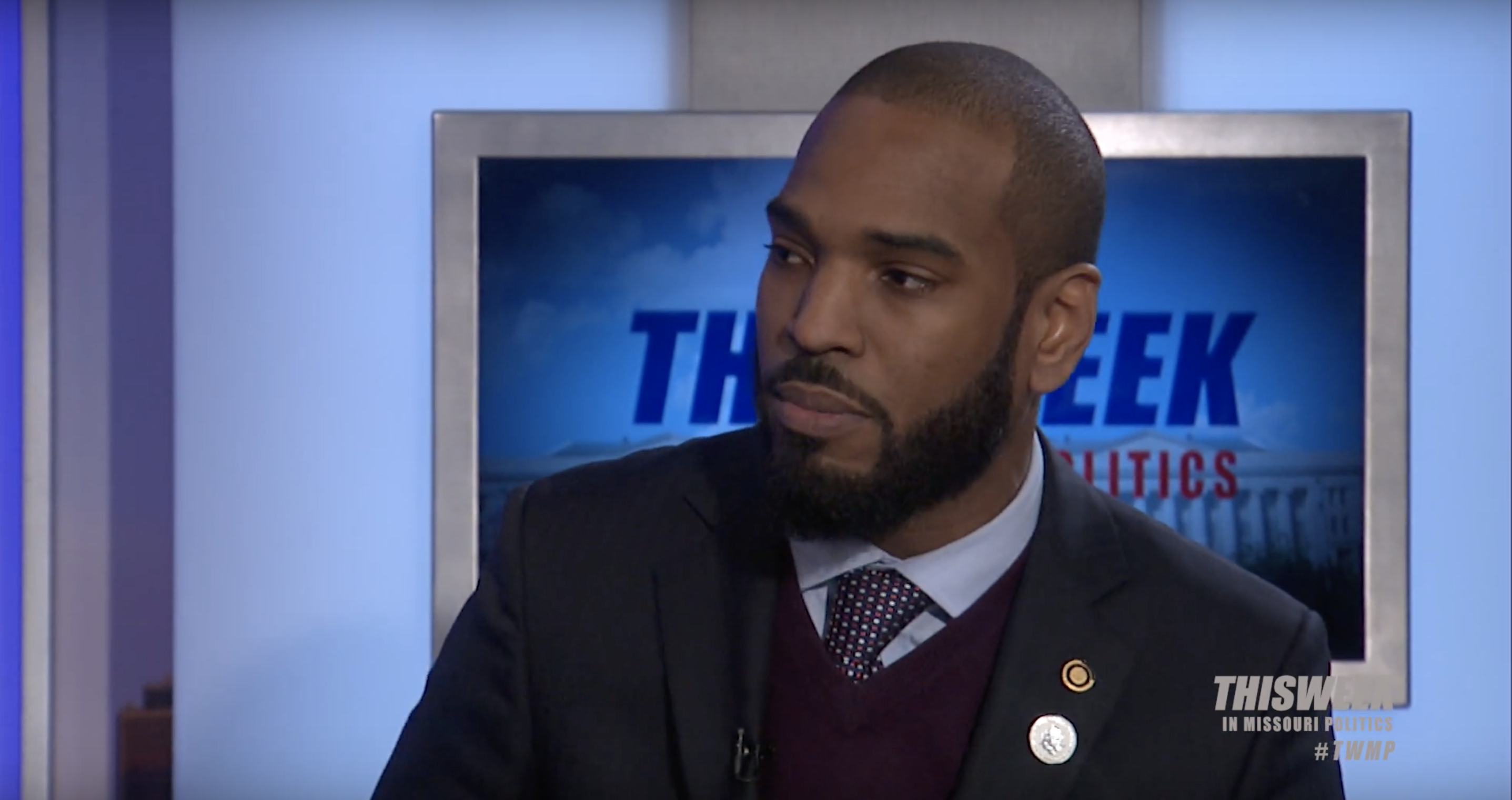
A Cole County Circuit Court judge has ruled that the Missouri House of Representatives acted without legal authority when it imposed and enforced monetary penalties against former state Rep. Wiley Price, ordering the state to repay more than $22,000 that had been withheld from his compensation.
In a detailed April 17 order, Circuit Judge Brian Stumpe granted Price’s motion for judgment on the pleadings, concluding that both the underlying ethics sanction and the method used to collect it violated state law.
Ethics case tied to 2020 investigation
The dispute stems from a Missouri House Ethics Committee investigation conducted during the 100th General Assembly. According to the court record, the committee adopted a report on Dec. 15, 2020, recommending that Price be censured and required to reimburse $22,492.25 in investigative costs.
However, the full House never voted to adopt the committee’s recommendation before the legislature adjourned sine die the following day, leaving the report unapproved.
Sanctions imposed by later legislature
When the 101st General Assembly convened in January 2021, the House moved forward with the matter. Lawmakers adopted a complaint imposing sanctions tied to the earlier ethics investigation and directed that $500 be deducted from Price’s legislative compensation each pay period until the full amount was recovered.
Those deductions were processed through the state’s centralized payroll system administered by the Office of Administration, and ultimately totaled the full $22,492.25.
No court judgment, garnishment order, or other judicial collection mechanism was ever obtained to authorize the withholding of those funds, the court found.
Court: authority expired with adjournment
In his ruling, Stumpe determined that the key legal issue was whether the 2020 Ethics Committee recommendation retained any legal force after the 100th General Assembly adjourned.
The court concluded it did not.
Under Missouri law, each General Assembly is considered a separate legislative body, and unfinished business does not carry over once a session ends unless formally preserved. Because the House failed to adopt the committee’s recommendation before adjournment, the matter expired and could not later be revived or enforced by a subsequent legislature.
The judge rejected arguments from state officials that internal House rules adopted in 2021 allowed lawmakers to resume unfinished ethics matters from a prior General Assembly, finding that such rules could not retroactively revive a lapsed recommendation.
Payroll deductions ruled unlawful
The court further found that even if the House had authority to impose discipline, the method used to collect the monetary sanction was unlawful.
Missouri law, the judge wrote, requires that compensation attached to public office be paid through the state treasury and may only be withheld through legally authorized means, such as a court judgment or garnishment proceeding.
Because the deductions were implemented administratively through the state payroll system, rather than through any judicial process, they lacked legal authorization.
The ruling also emphasized that legislative disciplinary authority does not itself create a mechanism to seize compensation outside of established legal procedures.
Declaratory relief and repayment ordered
As part of the judgment, the court declared that:
- The 2020 Ethics Committee recommendation lost legal effect upon adjournment of the 100th General Assembly
- The sanctions imposed in 2021 based on that recommendation were invalid
- The payroll deductions used to collect the penalty were unauthorized and unlawful
The court ordered the state to repay Price the full $22,492.25 within 60 days and permanently enjoined officials from enforcing any future deductions tied to the ethics complaint.
Judgment was entered against Missouri House Chief Clerk Joseph Engler and Office of Administration Commissioner Kenneth Zellers in their official capacities.
Broader implications
While the ruling does not limit the House’s constitutional authority to discipline its members, it underscores procedural constraints on how and when that authority can be exercised, particularly when enforcement carries financial consequences.
The decision signals that legislative bodies must act within the lifespan of a General Assembly when adopting disciplinary measures and must rely on legally authorized processes if they seek to collect monetary penalties.

Jake Kroesen serves as the Editor of the Missouri Times. He hails from Independence, Missouri and enjoys all things Jackson County. A graduate of UCM, he obtained his degree in Political Science.
Discover more from The Missouri Times
Subscribe to get the latest posts sent to your email.