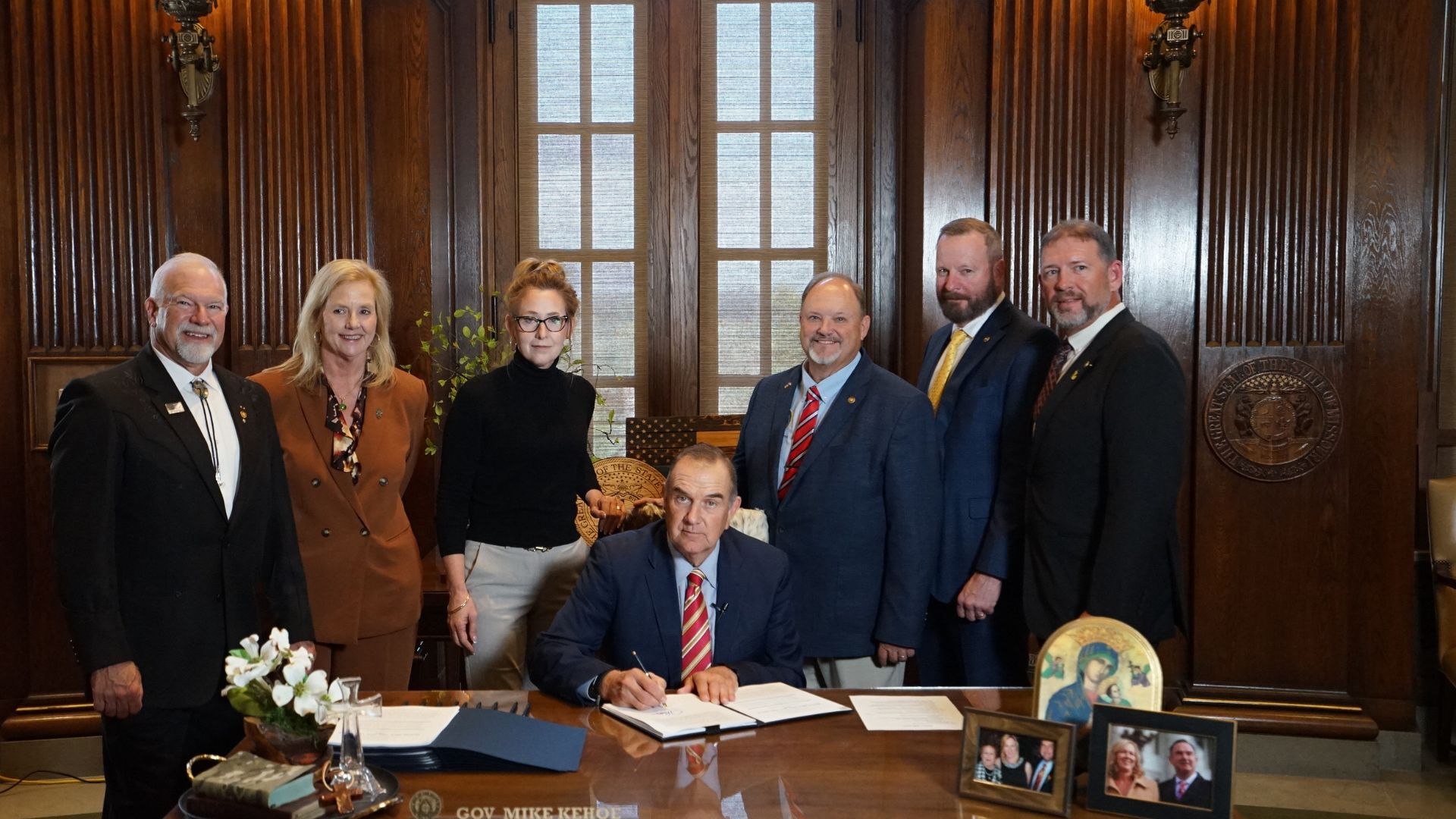
Governor Mike Kehoe signed three bills into law, Senate Bill 888 and House Bills 1908 and 2273, marking a significant step in Missouri’s efforts to strengthen public safety, modernize family law, and expand protections for vulnerable populations.
Senate Bill 888, sponsored by Sen. Nick Schroer and Rep. Brad Christ, represents one of the most comprehensive criminal justice measures passed this session. The legislation modifies a wide range of provisions related to Missouri’s criminal justice system, with a particular focus on repeat offenders, sentencing transparency, and juvenile accountability.
The bill allows for expanded record sharing to improve coordination between law enforcement and prosecutors, enhancing their ability to track cases and access juvenile adjudication history across jurisdictions. It also creates a confidential statewide juvenile criminal history system aimed at improving information sharing while maintaining privacy protections.
Under the measure, the circumstances in which juveniles can be certified as adults are narrowed, limiting certification primarily to the most serious offenses such as Class A and B felonies, sexual crimes, and repeat felony activity. At the same time, coordination between juvenile officers and prosecutors is increased.
The legislation adds stricter penalties for sexual offenses and broadens the definition of “dangerous felonies,” requiring individuals convicted of such crimes to serve at least 85 percent of their sentence before becoming eligible for parole. It also streamlines sentencing procedures and increases transparency in how parole eligibility is calculated, while strengthening requirements related to jail time credit.
Additional provisions expand fingerprinting requirements for certain juveniles accused of felony offenses and close juvenile court proceedings to the public, reflecting a shift toward greater privacy within the system.
“Missouri must address the revolving door for repeat violent offenders—and that includes juveniles,” said Governor Kehoe. “This bill delivers for law enforcement, prosecutors, and the safety of our communities by giving our criminal justice system the authority to respond to serious juvenile and adult offenses and strengthening sentencing transparency. Together, we are continuing to build on our Safer Missouri public safety initiative.”
House Bill 1908, sponsored by Reps. Cecelie Williams and Raychel Proudie and Sen. Jill Carter, addresses a long-standing provision in Missouri law that previously prevented courts from finalizing a divorce while a woman was pregnant.
The new law clarifies that pregnancy status cannot be used as a barrier to granting a divorce or legal separation, allowing courts to move forward with proceedings regardless of pregnancy.
Supporters say the change removes a significant legal obstacle that could keep individuals—particularly those in unsafe or abusive relationships, from leaving.
“If we are serious about protecting life, we must also be serious about protecting vulnerable women and mothers,” Kehoe said. “House Bill 1908 ensures that pregnancy is never used as a barrier to prevent a woman from seeking a divorce in unsafe situations.”
Rep. Williams, who has spoken publicly about her own experience, said the legislation represents a meaningful step toward ensuring women are not forced to remain in dangerous circumstances due to outdated legal restrictions.
House Bill 2273, sponsored by Rep. Ed Lewis and Sen. Jill Carter, makes sweeping updates to Missouri law aimed at strengthening protections against sexual exploitation, particularly involving minors and online activity.
The legislation, known in part as “Sophie’s Law”, creates new criminal offenses, including grooming or enticement of a minor, and targets patterns of behavior intended to manipulate children into sexual activity. It also establishes penalties for sadistic online exploitation and increases penalties for sex offenses involving minors.
The bill modifies statutes to address the sharing or threatened distribution of intimate images, including those created or altered using digital manipulation. It also updates statutory language by replacing the term “child pornography” with “child sexual abuse material,” reflecting a broader and more modern understanding of exploitative content.
In addition, the legislation strengthens Missouri’s efforts to combat child sex trafficking by requiring expanded training for law enforcement, prosecutors, emergency responders, and social workers. It also establishes a statewide council and dedicated funding to support anti-trafficking efforts, education initiatives, and victim services.
“Missouri will not tolerate those who exploit or harm our most vulnerable, especially our children,” Kehoe said. “This bill strengthens Missouri law to keep pace with evolving threats, while protecting those most at risk.”

Jake Kroesen is a Jackson County native and a graduate of the University of Central Missouri. He holds a B.S. in Political Science.