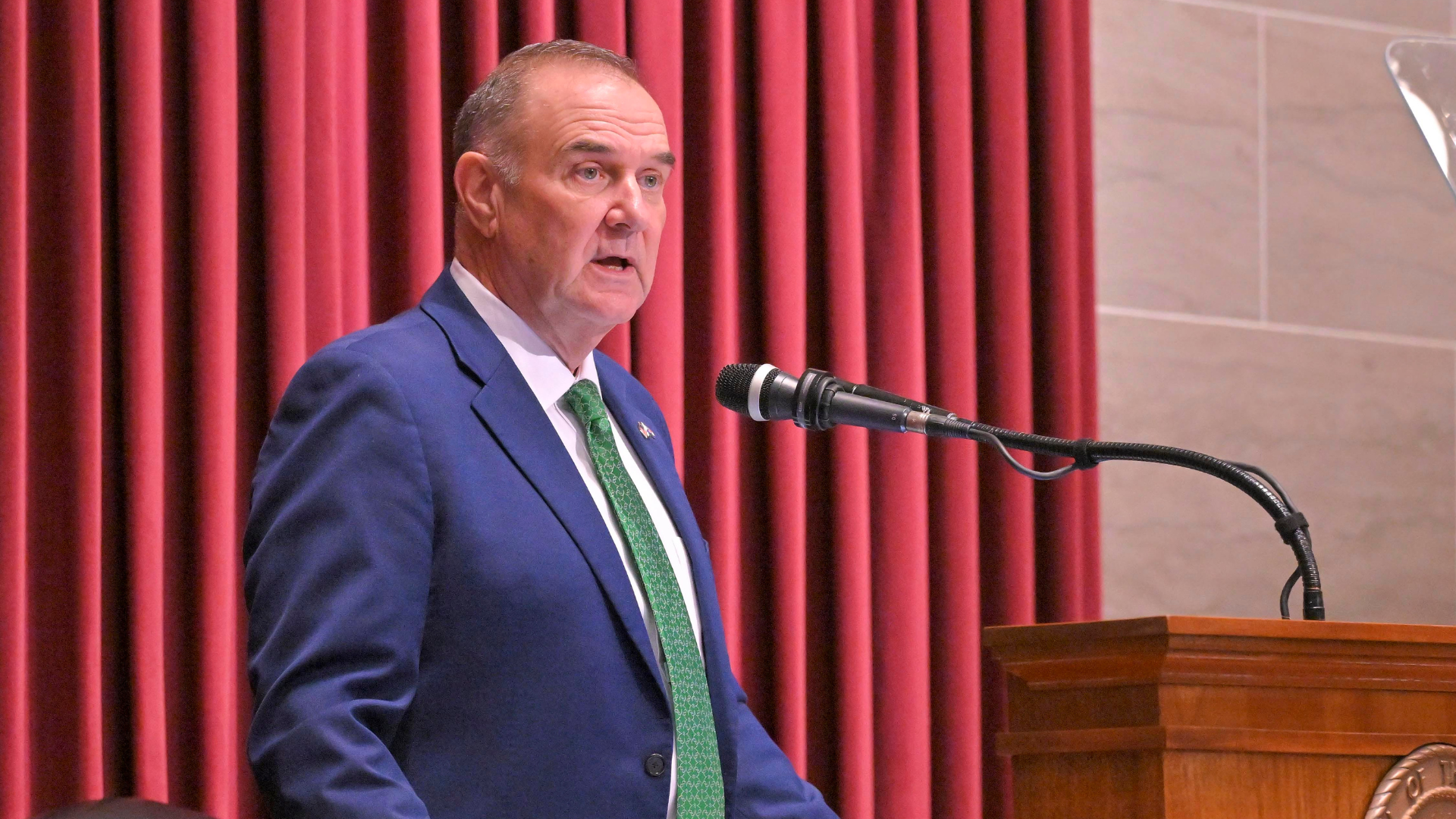
A Missouri court has ruled that Governor Mike Kehoe had constitutional authority to convene the General Assembly in an extraordinary session in September 2025, rejecting a legal challenge that sought to invalidate legislation passed during that session.
The decision follows a bench trial held December 15, 2025, on plaintiffs’ First Amended Petition for Declaratory Judgment. Plaintiffs asked the court to declare that the governor lacked authority under Article IV, Section 9 of the Missouri Constitution to call the special session. They argued that if the proclamation were invalid, House Bill 1, which established a new congressional redistricting map and enacted changes to initiative petition procedures, would also be invalid.
Background
On August 29, 2025, Governor Kehoe issued a proclamation calling the General Assembly into an extraordinary session beginning September 3, 2025. The proclamation specified that lawmakers would consider matters related to congressional redistricting and ballot measure reform.
During the session, legislators passed House Bill 1 and House Joint Resolution 3. HJR 3 submits to Missouri voters a proposed constitutional amendment related to ballot measures. The General Assembly adjourned on September 12, 2025, and the governor signed HB1 on September 28, 2025.
Court’s Analysis
The central issue before the court was whether the governor had authority under Article IV, Section 9 to call an extraordinary session under the circumstances presented.
The constitutional provision states that the governor “may, on extraordinary occasions, convene the general assembly by proclamation,” and must state specifically the matters for legislative action.
In its ruling, the court determined that the language of the Constitution grants the governor discretion to determine what qualifies as an “extraordinary occasion.” The court concluded that the provision’s wording is subjective and does not impose an external standard for judicial review beyond ensuring the proclamation satisfies procedural requirements.
The court noted that Missouri courts had not previously addressed this specific issue. It also referenced decisions from courts in other states that have interpreted similar constitutional language as granting governors discretion in determining when to call special sessions.
Additionally, the court concluded that the issue presents a political question appropriately resolved by the executive branch rather than the judiciary.
Outcome
The court denied the plaintiffs’ request for declaratory and injunctive relief and entered final judgment in favor of the defendants. As a result, the legislation passed during the September 2025 extraordinary session remains in effect.
An appeal of the decision is possible.

Jake Kroesen is a Jackson County native and a graduate of the University of Central Missouri. He holds a B.S. in Political Science.