Missouri lawmakers are again taking aim at one of the most technical, but increasingly consequential, areas of civil litigation: settlement demand practices. Known broadly as “Demand Reform Legislation,” the effort seeks to address how pre-suit settlement demands are structured, communicated, and enforced in the state’s courts.
At its core, the issue is not about whether injured parties should be compensated. It is about whether the current system creates incentives for strategic behavior that drives up costs, distorts negotiations, and exposes defendants and insurers to outsized liability risk disconnected from the underlying facts of a case.
The examples are not theoretical. They are happening every day in Missouri.
A review of recent demand letters and claim handling scenarios illustrates the challenge. In one case, an attorney made a demand for policy limits while explicitly refusing to provide medical bills, stating that “adjusters seem to fixate on the bills.” At the same time, the demand was left open-ended, with language indicating that “time is of the essence,” but without a clear deadline.
This combination creates a legal trap. Without sufficient documentation, the insurer cannot reasonably evaluate the claim. Without a defined timeline, the insurer faces uncertainty about when the demand might be withdrawn. Yet failure to accept the demand can later be framed as bad faith, opening the door to damages far exceeding policy limits.
That dynamic is not rare. It is systemic.
In another example, a dog bite case began with a demand for $75,000 or policy limits, even though supporting documentation was incomplete and medical bills were not provided. Negotiations proceeded with a series of counteroffers, but within just 37 days of the initial demand, the plaintiff filed suit. Outside counsel warned that despite the lack of necessary information, accepting the demand might be the safest course simply to avoid bad faith exposure.
This is the environment Missouri businesses, drivers, and insurers operate in today.
Supporters of Demand Reform Legislation argue that these practices distort the fundamental purpose of settlement negotiations. In a functioning system, both sides exchange information, assess risk, and work toward a resolution that reflects the merits of the case. But when key information is withheld, or when demands are structured to create artificial pressure, that process breaks down.
The result is predictable. Cases settle for amounts driven less by facts and more by litigation risk.
One of the most striking examples involves a claim where early medical bills totaled under $5,000, yet the plaintiff demanded policy limits of $25,000 without providing full records. As more information emerged, the demand escalated dramatically to $100,000 and ultimately $350,000. The case settled above policy limits due to uncertainty in how Missouri law might treat the insurer’s earlier refusal to accept the initial demand.
This pattern highlights the central concern driving reform efforts. When the legal framework rewards ambiguity and penalizes reasonable evaluation, it creates incentives for gamesmanship rather than good faith negotiation.
Missouri lawmakers are now working to recalibrate that balance.
While specific legislative language continues to evolve, the general framework of Demand Reform Legislation focuses on several key principles. First, requiring reasonable disclosure of supporting documentation, such as medical bills and records, before a policy limits demand can trigger bad faith exposure. Second, establishing clearer timelines so that both parties understand when an offer must be accepted. Third, ensuring that settlement demands are made in a way that allows for meaningful evaluation rather than strategic ambiguity.
These reforms are not designed to limit recovery for legitimate claims. They are designed to ensure that claims are evaluated on evidence, not leverage.
Critics of reform argue that any additional requirements could disadvantage injured plaintiffs or delay compensation. But proponents counter that it is actually in the injured plaintiff’s best interest to provide full and accurate information on the claim so it can be properly valued and paid more quickly. Additionally, the current system already undermines fairness by encouraging inflated demands and discouraging transparent negotiation.
The documentation tells the story.
In multiple cases, attorneys explicitly declined to provide key information while still demanding policy limits. In others, demands were left open-ended or vaguely time-bound, creating uncertainty that could later be used to allege bad faith. In still others, claims escalated dramatically over time, with settlement values untethered from initial evidence.
Taken together, these examples reveal a system where process often matters more than substance.
That has broader implications beyond individual cases. Increased litigation costs ultimately flow through to consumers in the form of higher insurance premiums. Businesses face greater uncertainty and liability exposure. Courts are burdened with cases that might otherwise be resolved through good faith negotiation.
Missouri has already taken steps in recent years to address related issues in civil litigation, including reforms targeting third party litigation funding and demand letter practices. Demand Reform Legislation represents the next phase of that effort.
The goal is straightforward. Restore predictability. Encourage transparency. Reduce incentives for abuse.
Whether the legislation ultimately passes will depend on how lawmakers balance competing concerns and how effectively supporters communicate the real-world impact of current practices. But the underlying issue is unlikely to fade.
For many Missourians, this is not an abstract legal debate. It is about whether the system treats people fairly, whether disputes are resolved based on facts, and whether the rules encourage honest negotiation or strategic manipulation.
Demand Reform Legislation is an attempt to answer those questions.
And based on the evidence already in front of lawmakers, it is a conversation that Missouri can no longer afford to ignore.
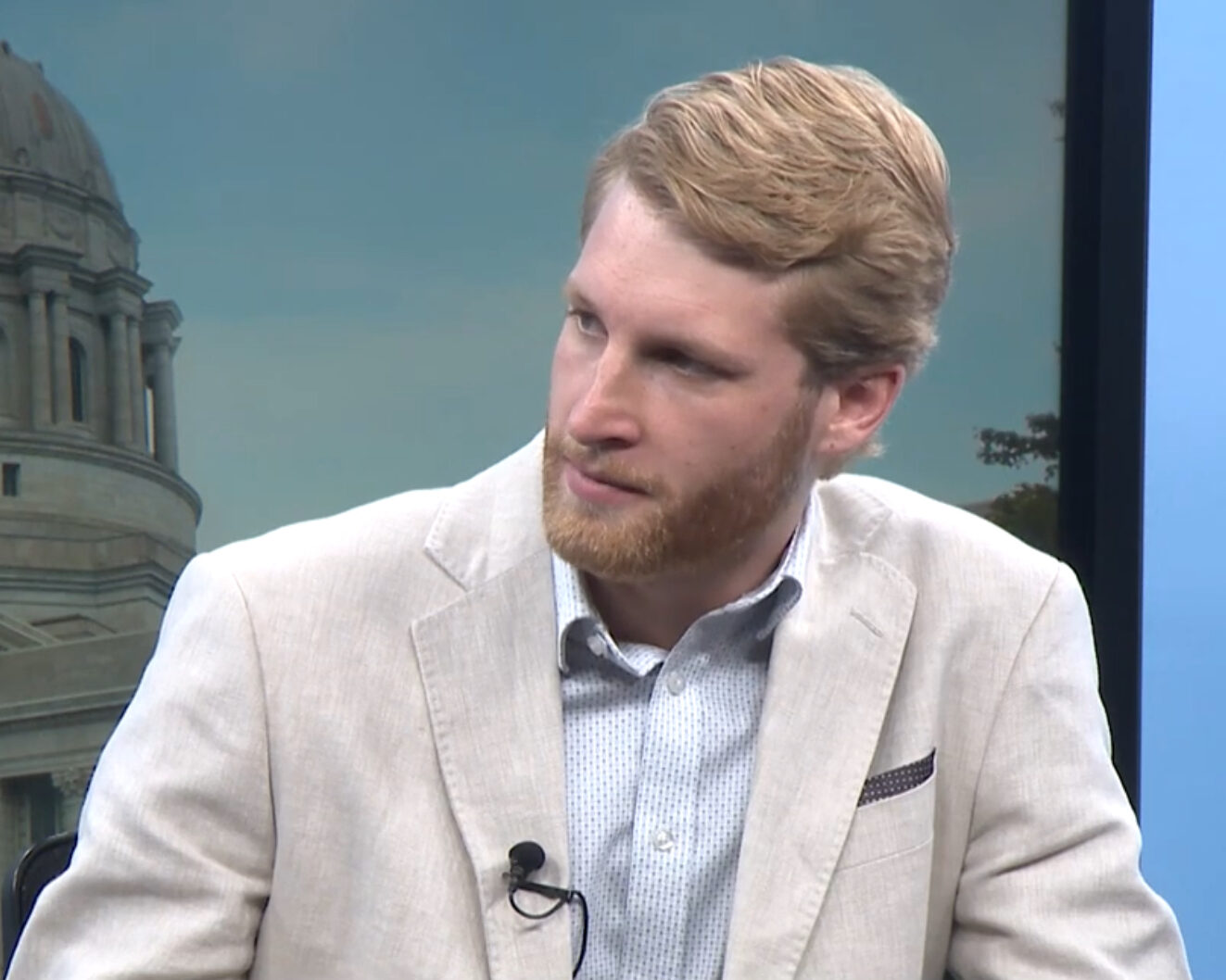
Jake Kroesen is a Jackson County native and a graduate of the University of Central Missouri. He holds a B.S. in Political Science.