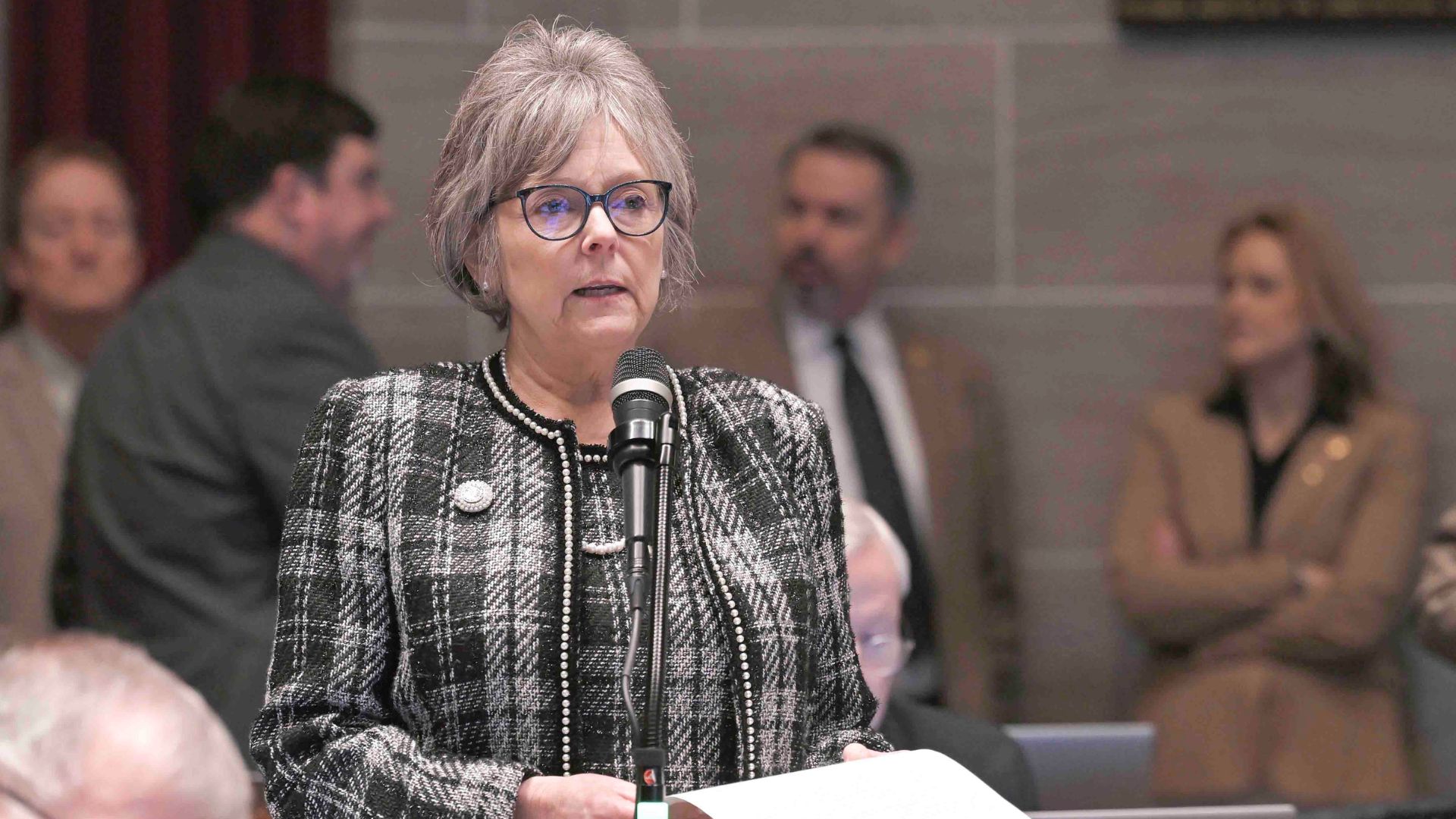
Rep. Peggy McGaugh sat down with the Missouri Times for a reflective exit interview as she prepares to conclude her service in the Missouri House after decades representing rural Missouri at both the county and state levels. After 32 years in the Carroll County Clerk’s Office and years advocating for local governments across northwest Missouri, McGaugh said her measure of success in public office was never the number of bills she passed, but whether she faithfully represented the people back home.
“I always wanted to go home knowing I had represented them well,” McGaugh said.
Before serving in the Legislature, McGaugh spent more than three decades working in the Carroll County Clerk’s Office, where she gained firsthand experience with local government operations, elections administration and the challenges facing rural communities. That background shaped her priorities in Jefferson City and guided her efforts to protect county governments, support fair elections and ensure rural Missourians had a strong voice in state policymaking.
When McGaugh first arrived in the Missouri House, she quickly became involved in election policy and later served as chair of the House Elections Committee. She described the committee as one of her favorite assignments because it connected directly to the work she had done throughout her career.
“People still come to me,” she said when discussing election legislation and policy issues.
Her experience gave her confidence to advocate for local election officials and defend Missouri’s election systems during a period marked by heightened scrutiny and public debate about election administration. She said her approach was grounded in practical knowledge gained through years of hands-on experience at the county level.
McGaugh’s decision to run for the Legislature came after her son returned home to work at the courthouse, creating an opportunity for her to pursue state office. Even so, the transition from county government to the state Capitol required adjustment.
“It was harder than I thought because it was much more political,” she said.
After decades serving in a local office where she worked independently, McGaugh found herself learning the rhythms of legislative collaboration alongside a large freshman class. Over time, she built relationships with colleagues and learned to rely on shared expertise across committees and caucuses.
Her years in county government continued to shape her approach to policymaking. McGaugh emphasized the importance of maintaining a positive attitude, listening carefully to others and working across party lines to find practical solutions that reflected the needs of rural communities.
She became especially engaged in election reform and absentee voting policy. One accomplishment she highlighted was supporting improvements that expanded access to absentee voting while maintaining the integrity of the process.
“Now they do not have to lie,” she said, referring to changes that allowed broader access to absentee ballots without requiring voters to provide traditional excuse-based justifications.
Beyond election policy, McGaugh was a consistent advocate for rural economic development and infrastructure investment. She worked to ensure smaller communities had opportunities to grow and remain competitive at a time when many rural areas continue to face population loss and workforce challenges.
“I want my communities to thrive and survive,” she said.
She was particularly proud of helping support broadband expansion funded through federal programs, which she viewed as essential to connecting rural communities to education, health care and economic opportunity.
McGaugh also brought years of leadership experience from the Missouri Association of Counties, where she advocated for county governments at both the state and national levels. Those experiences strengthened her understanding of the day-to-day realities local officials face and prepared her to speak confidently on behalf of rural Missouri in the Legislature.
She said that when the opportunity to seek office presented itself, she knew “the time was right.”
Representing her district carried a personal dimension throughout her legislative service. Many of the people she represented were lifelong friends, neighbors and community members she had known for years through her work in county government.
“They’re all my friends who depended on me to be your voice,” she said.
As she prepares to step away from elected office, McGaugh said she looks forward to returning home and spending more time with her family, especially her granddaughters and her 92-year-old mother. Even so, she expects public service will remain part of her life in some capacity.
Her advice to future rural leaders reflects the same principles that shaped her career: build relationships, ask questions and never lose sight of the importance of working together for the good of local communities.
For McGaugh, leaving the Legislature marks not the end of service, but a return to the communities that first shaped her commitment to public life, and that she spent decades working to represent.
Discover more from The Missouri Times
Subscribe to get the latest posts sent to your email.