A liberal policy organization is drawing criticism from supporters of Mike Kehoe after falsely claiming that the governor’s tax modernization plan would harm Missouri school districts.
The Missouri Budget Project recently released analysis criticizing the governor’s proposal to modernize Missouri’s tax system and allow voters to consider phasing out the state income tax through House Joint Resolutions 173 and 174. In its materials, the group suggested the plan could negatively affect local school funding.
Supporters of the proposal say that claim is inaccurate. The language of the resolution specifically states that any reform must protect funding for public schools, a provision included to ensure school districts are not harmed as part of broader tax modernization efforts.
The Missouri Budget Project is a liberal think tank that has advocated for expanding government programs in the state, including supporting the successful ballot initiative to expand Medicaid in Missouri. The organization also receives funding from progressive philanthropic organizations, including the Unitarian Universalist Fund for a Just Society, which supports social justice and public policy advocacy efforts.
Gov. Kehoe’s proposal is designed to modernize Missouri’s tax code while phasing out the individual income tax over time rather than eliminating it immediately. The legislation includes a series of revenue “triggers” that would gradually reduce the income tax rate only when state revenues grow beyond certain benchmarks. Under the proposal, the top income tax rate would be reduced incrementally when general revenue collections exceed established thresholds, ensuring the state budget remains stable before any tax cuts take effect.
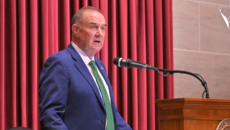
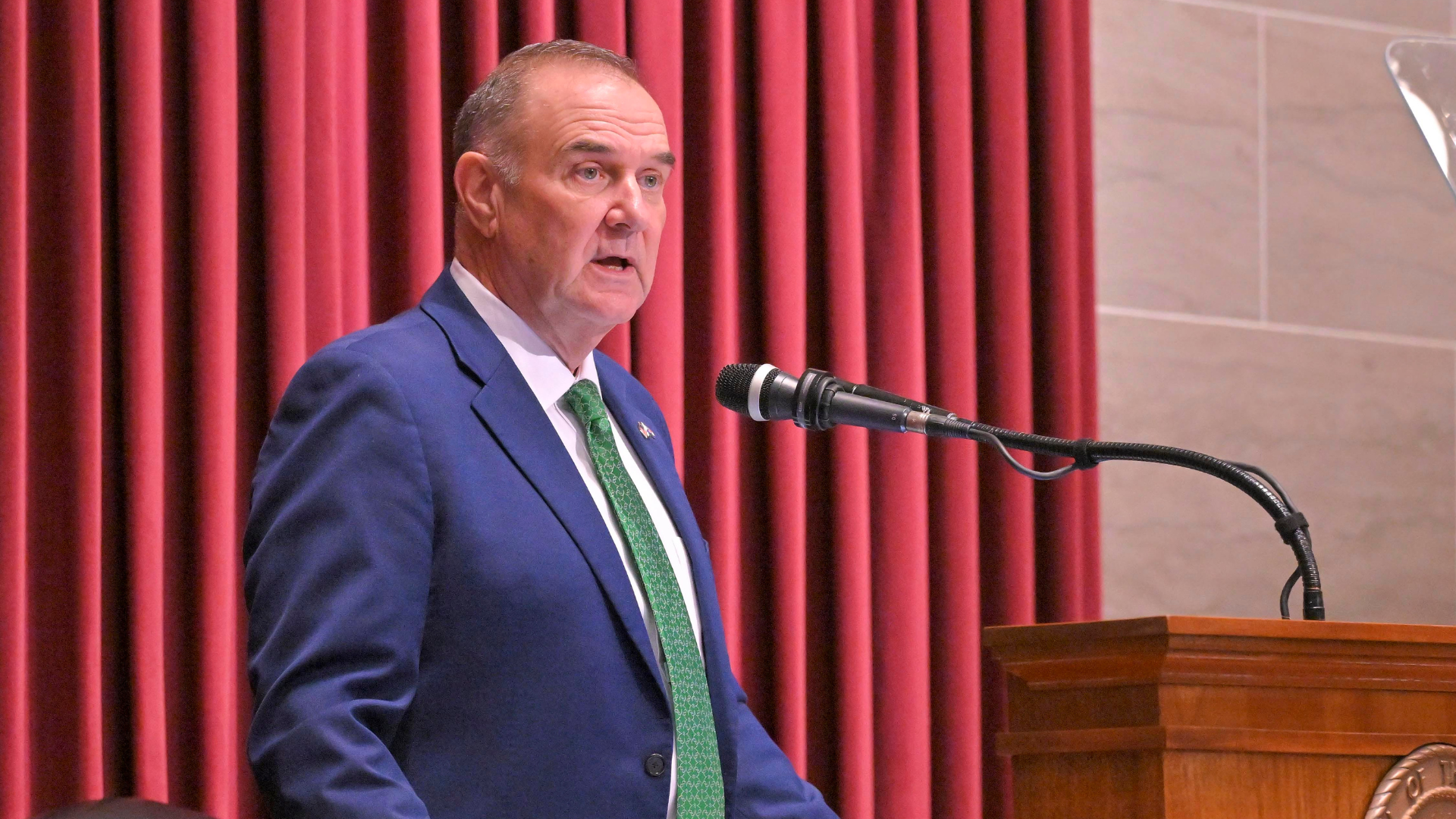
“Phasing out Missouri’s individual income tax is about setting up Missouri communities for success in the decades to come,” stated Governor Kehoe “Growing Missouri’s economy through this phased income tax elimination will expand the overall tax base over time, which means more total revenue available for education, not less.”
Supporters say those safeguards are intended to prevent budget shortfalls while allowing the tax code to evolve alongside Missouri’s growing economy.
The proposal is part of a broader debate about whether Missouri’s tax structure reflects the modern economy. The state income tax was first adopted more than a century ago, and critics of the current system argue it relies heavily on taxing wages while failing to capture much of today’s service-based economy.
Over time, Missouri’s tax code has accumulated more than 200 exemptions and carve-outs that lawmakers from both parties have added over decades. Reform advocates argue the outdated structure contributes to Missouri falling behind faster-growing states that have modernized their tax systems.
During his State of the State address, Kehoe emphasized that key sectors of Missouri’s economy would be protected under the proposal, including agriculture, healthcare, and real estate transactions.
House Joint Resolutions 173 and 174 remain under consideration in the Missouri General Assembly. If approved by lawmakers, the measure would go before Missouri voters, who would ultimately decide whether the state should begin phasing out the income tax as part of a broader modernization of Missouri’s tax code.
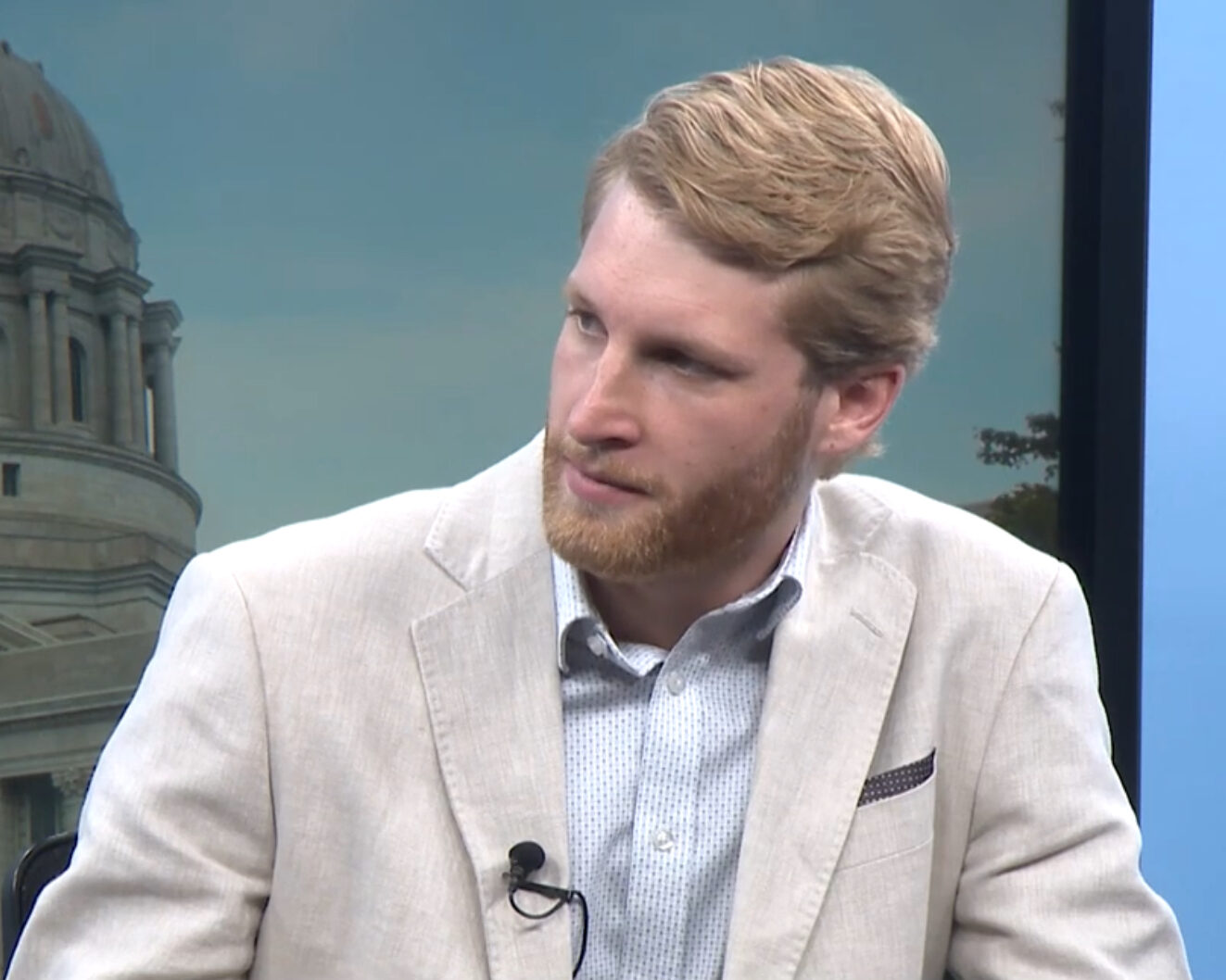
Jake Kroesen is a Jackson County native and a graduate of the University of Central Missouri. He holds a B.S. in Political Science.