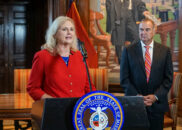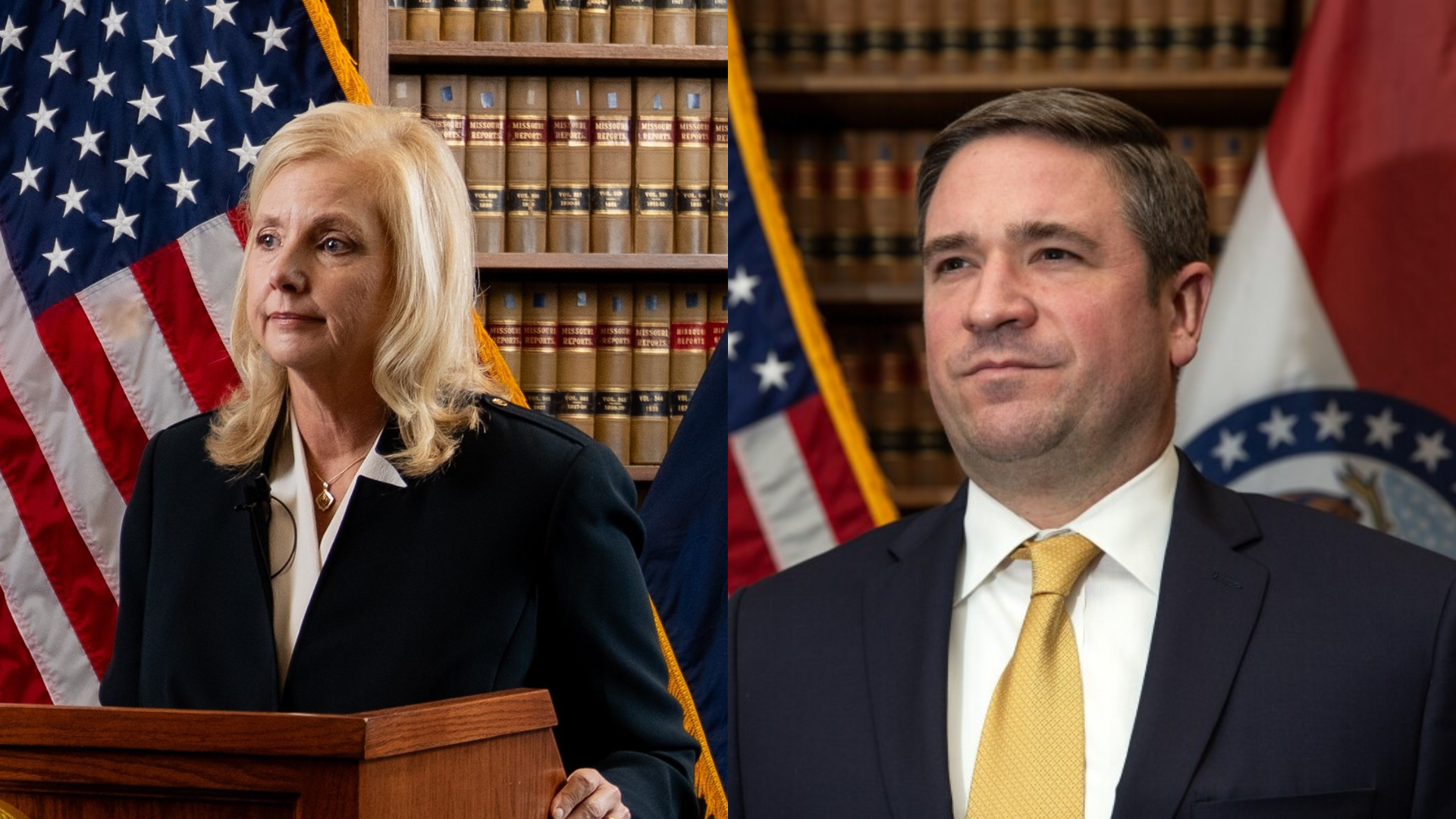
Attorney General Catherine Hanaway said Tuesday that China has filed a $50 billion lawsuit against Missouri in a Chinese court, calling the action retaliation for the state’s efforts to seize Chinese-owned assets to satisfy a $24 billion federal judgment tied to the COVID-19 pandemic.
According to Hanaway, the lawsuit was filed in the Intermediate People’s Court of Wuhan on behalf of the People’s Government of Wuhan Municipality, the Chinese Academy of Sciences, and the Wuhan Institute of Virology. The complaint declares Missouri an “economic and reputational threat” to the People’s Republic of China and accuses state officials of damaging Wuhan’s global standing.
Hanaway said the Chinese filing followed Missouri’s move to identify and potentially seize Chinese assets, including real property, financial interests, and other holdings, as the state works to collect on the $24 billion judgment it secured earlier this year against China, the Chinese Communist Party, and related entities.
“I find it extremely telling that the Chinese blame our great state for ‘belittling the social evaluation’ of the Wuhan Institute of Virology,” Hanaway said in a news release. “This lawsuit is a stalling tactic and tells me that we have been on the right side of this issue all along. We stand undeterred in our mission to collect on our $24 billion judgment that was lawfully handed down in federal court.”
The Chinese complaint alleges that actions by Missouri officials harmed China’s “soft power” and negatively affected “the productivity and commercialization of scientific and technological achievements” associated with the Chinese Academy of Sciences and the Wuhan Institute of Virology. It seeks damages totaling more than $50 billion, plus legal fees, and demands that Missouri officials issue public apologies in the New York Times, other American media outlets and online platforms, as well as Chinese media.
Those named as defendants include the State of Missouri, represented by Gov. Mike Kehoe; U.S. Sen. Eric Schmitt, R-Mo., who filed Missouri’s original lawsuit in 2020 while serving as attorney general; and the Missouri attorney general, including former Attorney General Andrew Bailey, now co-deputy director of the FBI.
In April, a federal judge in Cape Girardeau ordered China to pay Missouri $24 billion after finding that the defendants engaged in monopolistic practices by hoarding personal protective equipment during the COVID-19 pandemic. The ruling concluded that China’s actions worsened the pandemic by restricting the production, purchase, importation, and exportation of critical medical supplies.
Five years ago, Missouri sued China, alleging the country caused and exacerbated the COVID-19 pandemic by interfering with global medical supply chains. Hanaway has said she is awaiting certification from the U.S. State Department that would allow the state to move forward with seizing Chinese-owned assets in Missouri and other states to satisfy the judgment.
China has previously rejected the Missouri lawsuit. A Chinese government spokesperson said China reserves the right to take “reciprocal countermeasures” against what it described as “so-called lawsuits and judgments from the United States,” calling the cases politically motivated.
Schmitt, who is also named in the Chinese suit, said he considers the legal action further validation of Missouri’s case.
“I’ve been banned from Communist China, and now I am being sued and targeted in a $50 billion lawfare campaign, and I’ll wear it like a badge of honor,” Schmitt said. “China’s malfeasance during the COVID-19 pandemic led to more than a million Americans losing their lives, years of economic turmoil, and enormous human suffering. As Missouri attorney general, I filed suit to hold them accountable.”
Despite China’s lawsuit, Hanaway said Missouri remains committed to enforcing the $24 billion federal judgment. Officials say the state will continue identifying and pursuing Chinese-owned assets, underscoring that the legal battle is far from over and could mark a rare international showdown over pandemic-related accountability.
Jake Kroesen is a Jackson County native and a graduate of the University of Central Missouri. He holds a B.S. in Political Science.