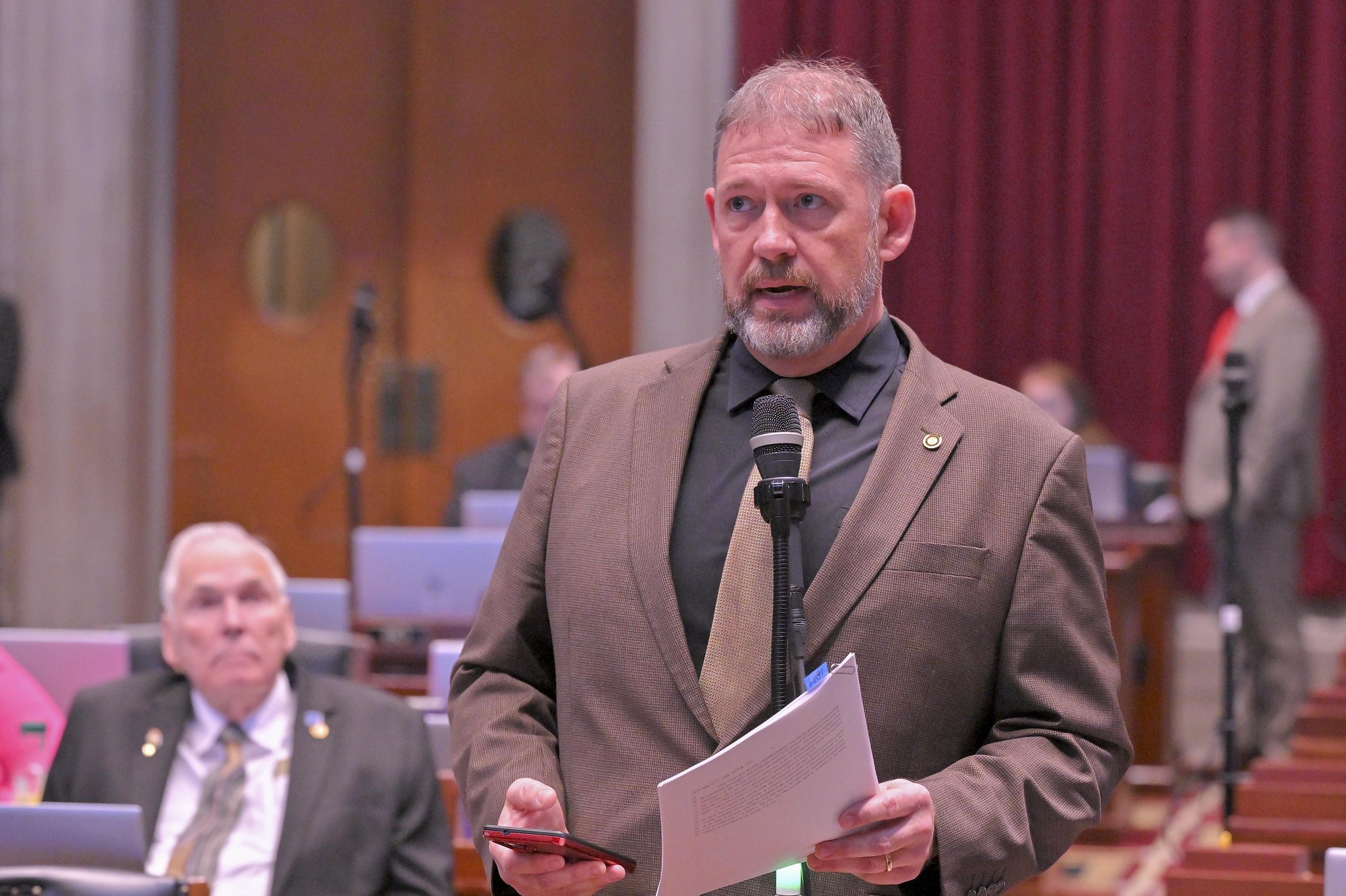
Legislation aimed at strengthening protections for children as well as addressing grooming and sexual exploitation, has cleared both chambers of the Missouri General Assembly and now awaits the governor’s signature.
House Bill 2273 establishes “Sophie’s Law,” creating a new criminal offense for the grooming of a minor. The measure targets adults who attempt to build relationships with children for the purpose of sexual exploitation. Under the legislation, an individual who engages in a pattern of conduct—such as sexual communication or actions intended to prepare, manipulate, or gain the trust of a minor—could face felony charges.
“Sophie’s Law” was inspired by a southwest Missouri family who brought their experience to the attention of Representative Chris Warwick. Their case involved the grooming of their daughter by a trusted karate instructor—an individual who had built a positive relationship with the family and was widely viewed as trustworthy. This familiarity made the situation especially difficult to detect in its early stages.
The abuse was uncovered when the victim’s older sister noticed concerning behavior and alerted their parents, who then contacted law enforcement. An investigation confirmed that grooming behaviors had occurred. However, authorities encountered a critical legal gap: Missouri law did not include a clear statutory definition of grooming. As a result, prosecutors were unable to pursue charges based solely on those actions.
At the time, existing law only allowed prosecution if the offender had progressed beyond grooming and committed a sexual act with the minor. This limitation exposed a significant weakness in the state’s legal framework, preventing intervention at an earlier stage when harm might still be prevented.
In response, lawmakers introduced “Sophie’s Law” to formally define grooming in Missouri state statute and equip law enforcement with the tools needed to act before exploitation escalates. The bill’s passage through both chambers reflects bipartisan recognition of the need to address this gap in the law. It is now awaiting the signature of Governor Mike Kehoe, and, if enacted, would represent a meaningful step forward in protecting children across the state.
Representative Warwick praised the legislation’s progress, stating, “I am happy to see my colleagues from both sides of the aisle take action on this issue and protect children of Missouri.”
In addition to establishing the offense of grooming, the bill strengthens penalties and expands protections in cases involving the nonconsensual dissemination of private sexual images, particularly when minors are involved. It also requires individuals convicted under several of the newly defined offenses to register as sex offenders under Missouri law.
“Sophie’s Law” is part of a broader legislative package aimed at enhancing Missouri’s response to human trafficking, child exploitation, and other sex crimes involving minors. Lawmakers say the package provides additional resources and legal tools to support law enforcement and prosecutors in combating these offenses.
Advocates and officials continue to warn that sex trafficking remains a serious issue in Missouri. The state’s central location and major interstate corridors make it a crossroads for trafficking activity, while online platforms and social media have created new avenues for predators to target young people. Supporters of the legislation emphasize that grooming behaviors—such as building trust through attention, gifts, or communication—are often the first step in exploitation.
Supporters argue that recognizing and criminalizing grooming earlier will allow authorities to intervene before abuse occurs. Representative Warwick emphasized this concern, stating, “All of our communities are seeing these predators infiltrate our youths’ safe spaces and taking children to do sex acts under the disguise of the nice guy.”